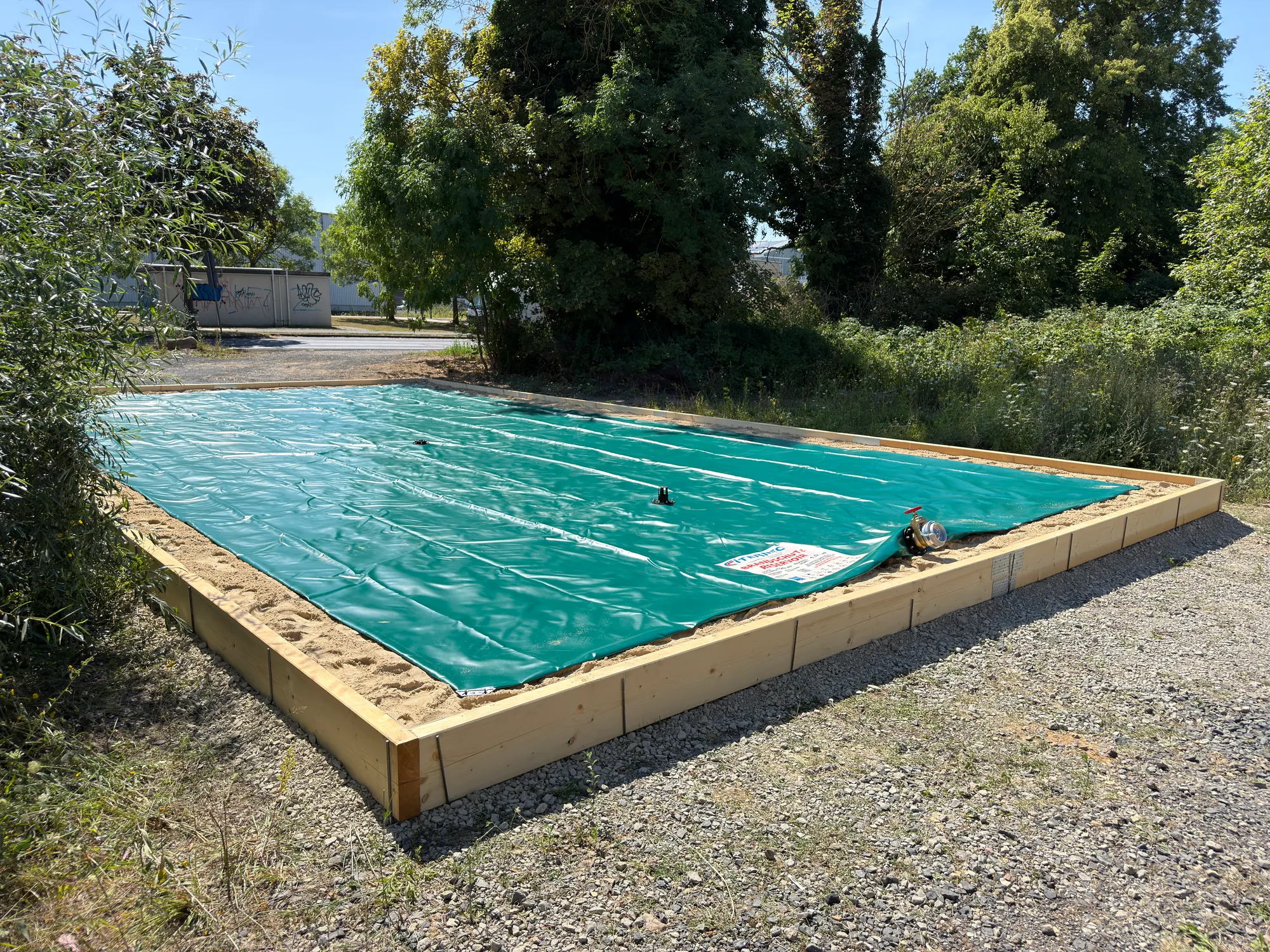
Montage eines Löschwassertanks für ein Logistikzentrum
Overview
Lightbox Software had doubled its customer base in under a year, but the rapid success exposed several internal gaps. Product shipped inconsistently, teams were overwhelmed, and leadership struggled to keep everyone aligned as priorities shifted weekly.
The company wasn't lacking skill — it was lacking coordination. Without a stronger operating model, growth was becoming harder to sustain.
The Core Problem
Leadership had never clearly defined how decisions were made or how teams should prioritize work. Each department interpreted goals differently, creating duplicated efforts, conflicting initiatives, and increasing tension among managers.
Execution didn't slow because of technical limitations — it slowed because the organization wasn't moving in the same direction.
Their real obstacle wasn't speed — it was misalignment.
Constraints & Reality Check
Lightbox was not failing. They were simply scaling faster than the systems supporting them.
Key constraints included:
- Roadmaps shifting weekly without clarity on ownership
- Meetings increasing while decisions became slower
- No unified method for evaluating new priorities
- Product, marketing, and engineering working from separate plans
- Teams overwhelmed by unclear expectations
The team was capable — but without structure, capacity was being wasted.
Strategic Approach
We focused on reducing noise, clarifying direction, and creating an operating rhythm the company could rely on.
Context Mapping
Interviews and workflow audits surfaced where expectations broke down across teams.
Strategic Architecture
We refined the company's goals into three core priorities, each supported by measurable outcomes.
Leadership Alignment
Cross-functional sessions brought leaders to a shared understanding of direction, trade-offs, and decision ownership.
Execution Structure
We created a 90-day roadmap that translated strategy into steady, predictable delivery.
Key Initiatives Implemented
- Introduced a unified quarterly planning cycle
- Redesigned the cross-functional decision-making structure
- Built a prioritization model for evaluating new initiatives
- Simplified roadmap communication across departments
- Established a standard operating cadence (reviews, decisions, updates)
Quantitative Results
- 42% faster product delivery cycles
- 30% reduction in duplicated work across teams
- 4x improvement in roadmap predictability
- Full leadership adoption of the new planning process
Qualitative Impact
- Teams gained clarity around what mattered and why
- Communication friction dropped significantly
- Collaboration strengthened across product and engineering
- Leaders felt more confident making decisions without escalation
- The company regained momentum instead of constantly recalibrating

“The clarity we gained changed everything. Our teams finally had direction, and execution became smooth and predictable again.”

Read more case studies

Cloudwatch
Cloudwatch engaged our team to clarify its approach to entering a new market after conflicting priorities and fragmented communication slowed progress. By defining a unified strategy, redesigning leadership decision frameworks, and implementing a structured execution rhythm, the firm aligned its teams, strengthened collaboration, and accelerated its market expansion efforts.
Discover case
GlobalBank
GlobalBank sought support after rapid sales growth exposed operational bottlenecks, including inconsistent fulfillment, manual forecasting, and unclear communication paths. We redesigned workflows, built an integrated planning system, and implemented structured operating procedures, enabling the brand to stabilize delivery performance and scale operations with greater confidence.
Discover case